
Foundayo (orforglipron): an explanation of the slimming pill with no specific dosage instructions

Short answer: Foundayo (orforglipron) is the first GLP-1 weight-loss pill based on a small molecule. Unlike other oral GLP-1 medicines, it can be taken at any time, with or without food or water. It is not yet available in the Netherlands.
Foundayo is the brand name for orforglipron, and this weight-loss pill differs in one key respect from all previous oral GLP-1 medicines. Whilst a tablet such as oral semaglutide must be taken on an empty stomach, Foundayo can be taken at any time of day, with no restrictions regarding food or water. This is because orforglipron is not a peptide but a small molecule – a difference we explain below. In this article, you can read about what Foundayo actually is, how it works, how effective it is, what side effects it may cause, and when it is expected to become available in the Netherlands.
What is Foundayo?
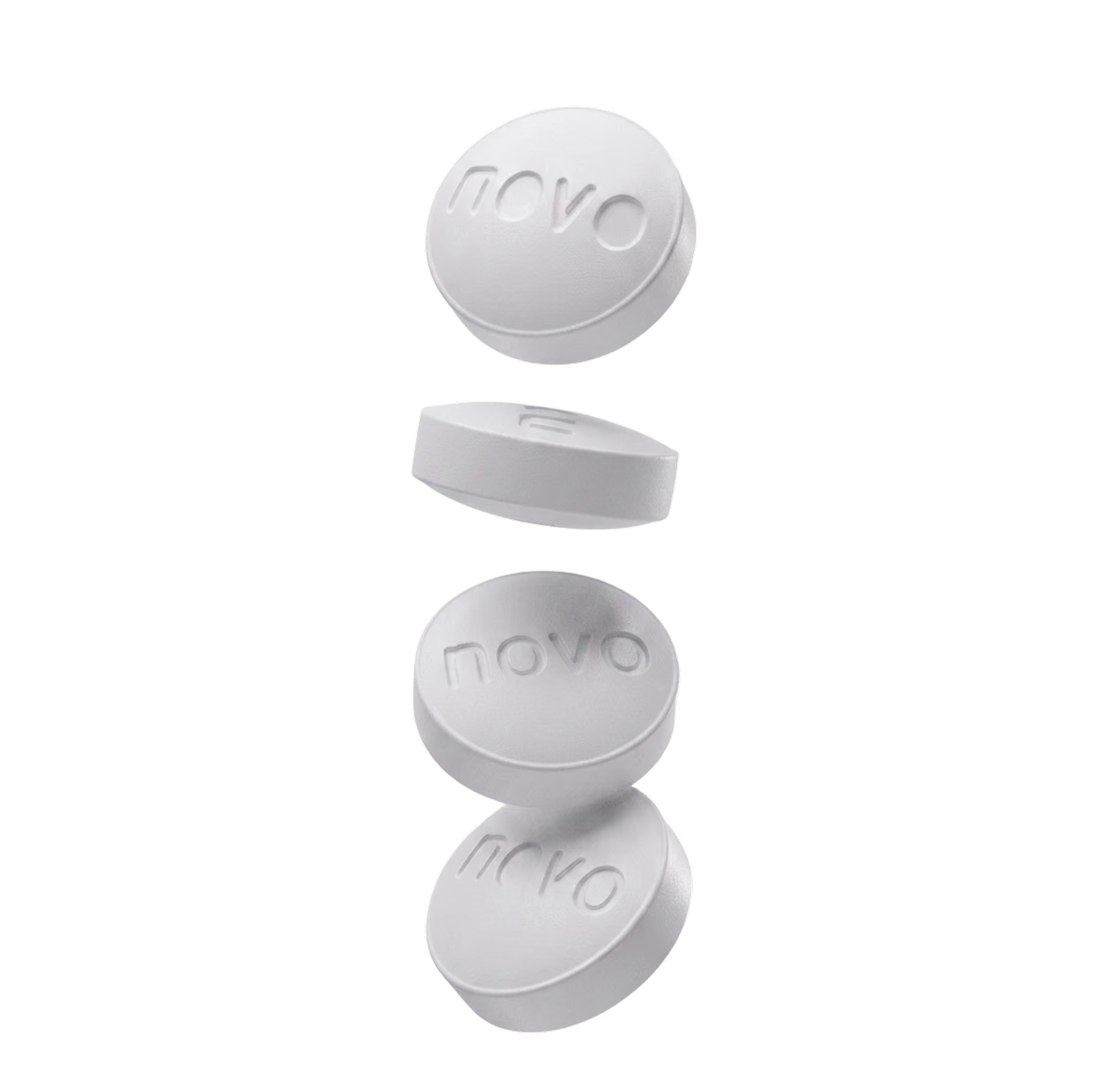
Foundayo is the brand name for orforglipron, the first weight-loss medicine in tablet form that uses a small molecule rather than a peptide. The medicine was developed by Eli Lilly and approved by the US Food and Drug Administration (FDA) on 1 April 2026. It is therefore the world’s first non-peptide-based, small-molecule GLP-1 receptor agonist on the market.
The difference between a peptide and a small molecule is more than just a technical detail. Peptide medicines such as semaglutide are broken down in the stomach, which requires strict intake rules to ensure that sufficient active substance reaches the body. Orforglipron is chemically structured to remain stable in the gastrointestinal tract, and therefore these rules are largely no longer applicable.
How does Foundayo work?
Foundayo works by activating the GLP-1 receptor, just like the well-known injectable medicines. This activation delays gastric emptying, suppresses appetite and prolongs the feeling of fullness, enabling you to eat less without constantly feeling hungry. Anyone wishing to know more about how the GLP-1 mechanism works will find a more detailed explanation there.
The difference compared with other GLP-1 medicines lies not in the mechanism of action but in the chemical structure. A small molecule is more stable in the gastrointestinal tract than a peptide, and it is precisely this stability that enables a tablet to be taken once a day without the need to fast. Research into the mechanism of action shows that orforglipron activates the receptor via a non-peptide pathway, which explains its stability in the body.
How effective is Foundayo?
Foundayo delivers clinically relevant weight loss comparable to that of injectable GLP-1 medicines. Phase 3 studies in obesity show that orforglipron, at the highest dose, led to weight loss of approximately nine kilograms, with a safety profile in line with that of the existing GLP-1 class. In people with early-stage type 2 diabetes orforglipron reduced HbA1c by approximately 2.2 per cent, compared with approximately 1.4 per cent for Rybelsus.
Important to remember: this HbA1c result stems from diabetes research, as Rybelsus, the oral semaglutide tablet, is approved for type 2 diabetes, although, just like Ozempic, it is also used off-label for weight loss. The final effect depends largely on consistent use in combination with lifestyle and dietary changes. There are no guarantees, and the figures are averages from studies. In a comparison with oral semaglutide for type 2 diabetes orforglipron performed at least as well in terms of blood sugar control.
What distinguishes Foundayo from the Wegovy tablet?
The main difference is the flexibility of intake: you can take Foundayo at any time, whereas the Wegovy tablet, for example, must be taken on an empty stomach. Oral semaglutide should be taken with a little water, on an empty stomach, followed by a waiting period of at least half an hour before eating or drinking anything. Foundayo does not have these restrictions, and furthermore, it contains a different active ingredient: orforglipron is a small molecule, whilst semaglutide is a peptide. The table below compares the three variants.
What are the side effects of Foundayo?
The side effects of Foundayo are similar to those of the entire GLP-1 class. These mainly include gastrointestinal symptoms such as nausea, diarrhoea, vomiting and constipation, which are usually mild and temporary and occur primarily during the titration phase. You will recognise this pattern from the well-known side effects of GLP-1 medicines, such as nausea. A recent review of new GLP-1 medicines describes this side-effect profile as consistent across the class.
The ‘Farmacotherapeutisch Kompas’ describes the same category of gastrointestinal symptoms for the GLP-1 class, as well as, in rare cases, more serious problems such as pancreatitis or gallbladder problems. As Foundayo has only just been approved, long-term data are still limited. If symptoms are persistent or severe, you should always contact a doctor.
Is Foundayo already available in the Netherlands?
No, Foundayo is not yet available in the Netherlands. The medicine has been on the market in the US since 1 April 2026, but it has not yet been approved in the Netherlands or the rest of the EU. The European review by the EMA is still ongoing, and availability in Europe is not expected before 2027.
This also means that there is as yet no clarity regarding the exact indication, potential reimbursement or the exact launch date for the Dutch market. Anyone wishing to start treatment now can turn to the weight-loss medicine that is already available via a doctor. A doctor will then assess whether such treatment is appropriate and safe.
Would you like to start taking weight-loss medication now? Goodweigh can help you
Foundayo shows promise, but is not currently available in the Netherlands. In the meantime, Goodweigh offers guidance on approved GLP-1 medications that are already available. A Dutch doctor will assess, via an online consultation, whether a treatment is suitable for you and when you are eligible for GLP-1 medication. Would you like to know how this process works? Find out how Goodweigh’s online consultation works.
References
- Rosenstock, J., Frias, J. P., Rubino, D., et al. (2025). Orforglipron, an oral small-molecule GLP-1 receptor agonist, in early type 2 diabetes. The New England Journal of Medicine. https://pubmed.ncbi.nlm.nih.gov/40544435/
- Rosenstock, J., et al. (2026). Efficacy and safety of orforglipron compared with oral semaglutide in adults with type 2 diabetes (ACHIEVE-3). The Lancet. https://pubmed.ncbi.nlm.nih.gov/41765029/
- Sloop, K. W., et al. (2024). The pharmacological basis for nonpeptide agonism of the GLP-1 receptor by orforglipron. Science Translational Medicine. https://pubmed.ncbi.nlm.nih.gov/39693407/
- Son, J. W., et al. (2026). Novel GLP-1-based medications for type 2 diabetes and obesity. Endocrine Reviews. https://pubmed.ncbi.nlm.nih.gov/41054801/
- Wharton, S., et al. (2025). Orforglipron, an oral small-molecule GLP-1 receptor agonist for obesity treatment (ATTAIN-1). The New England Journal of Medicine. https://pubmed.ncbi.nlm.nih.gov/40960239/
- Farmacotherapeutisch Kompas. (z.d.). Semaglutide. Geraadpleegd op 23 juni 2026, van https://www.farmacotherapeutischkompas.nl/bladeren/preparaatteksten/s/semaglutide
Your Final Weight Loss Program
Transform your life with our personalized digital weight-loss program designed for lasting success.